

Three Things You Must Know About Recent Developments in AI - Part 3
Chinese AI is excellent and we can use it too. But with caution!

America innovates, China duplicates, Europe regulates
This is how things were for a long time. But the world is changing: old empires fall, new ones arise, and sometimes the old ones return. It is a perpetual cycle of civilisation. Often, when one empire collapses and another takes the lead, we tend to go into denial: 'No, they just copied what we had, they are not there yet - we are the crème de la crème of humankind. Not them.'
A dying dinosaur keeps roaring but the ice age is already covering the earth.
The third thing that you need to know about AI is that Chinese AI is excellent. It is a genuine innovation that is going forward at an enormous pace.
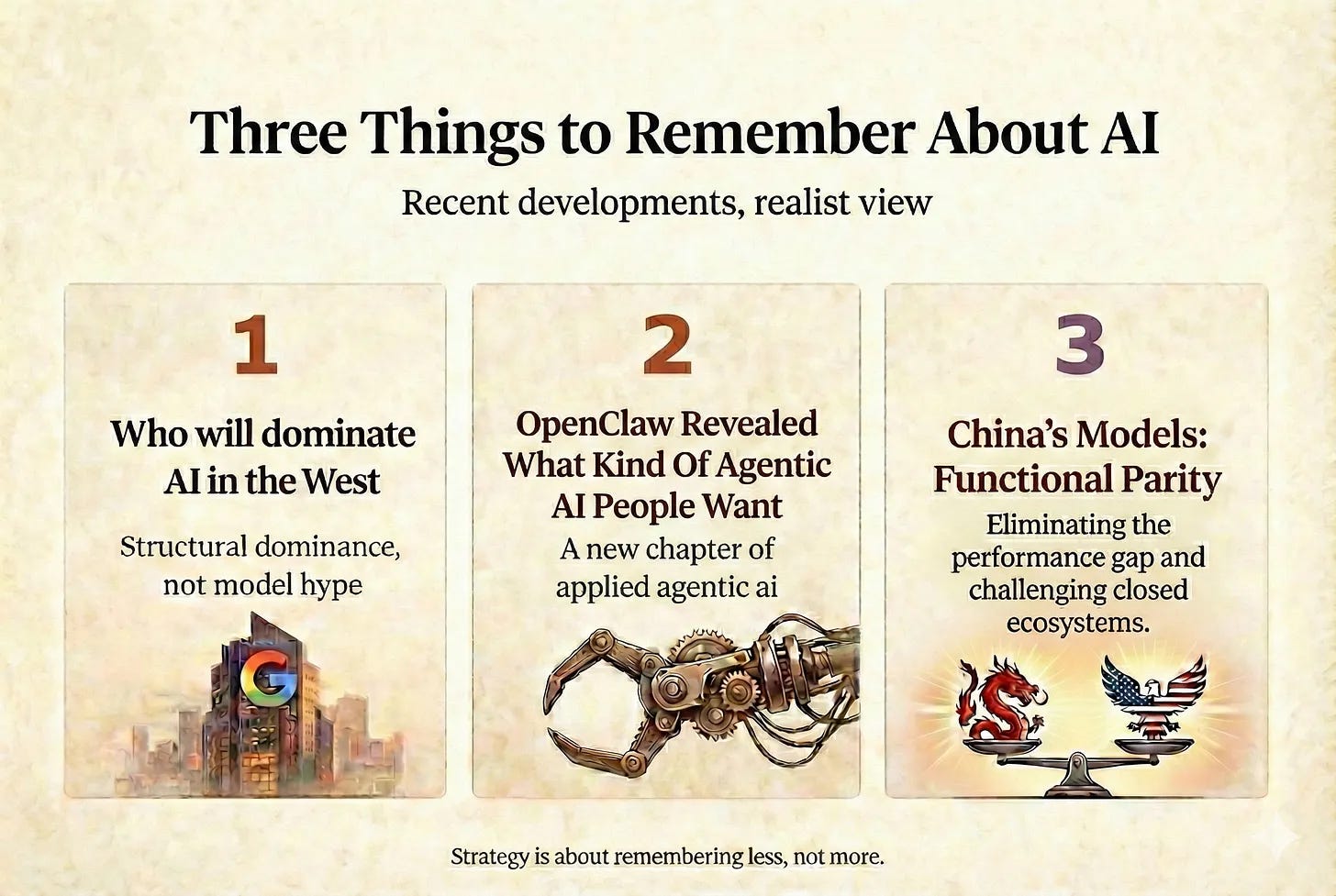
This is the final post in the series. You can read the previous two here:


Are you navigating an AI transformation and struggling to separate real value from hype? Not sure which tools to choose, how to govern agents, or whether a custom use case is worth the investment?
I offer personal consultations, workshops, and trainings tailored to exactly these questions.
Reach out through this form, describe your situation, and get a free 20-minute consultation.”
According to the State of AI Report 2025, Chinese open-weight models have surged ahead in user preference, global downloads and model adoption, becoming the world’s go-to open LLMs. In this article, I will argue that China is a new shiny AI empire that has resources, talent and infrastructure that, at the current state, is virtually unachievable for the European roaring dinosaur.
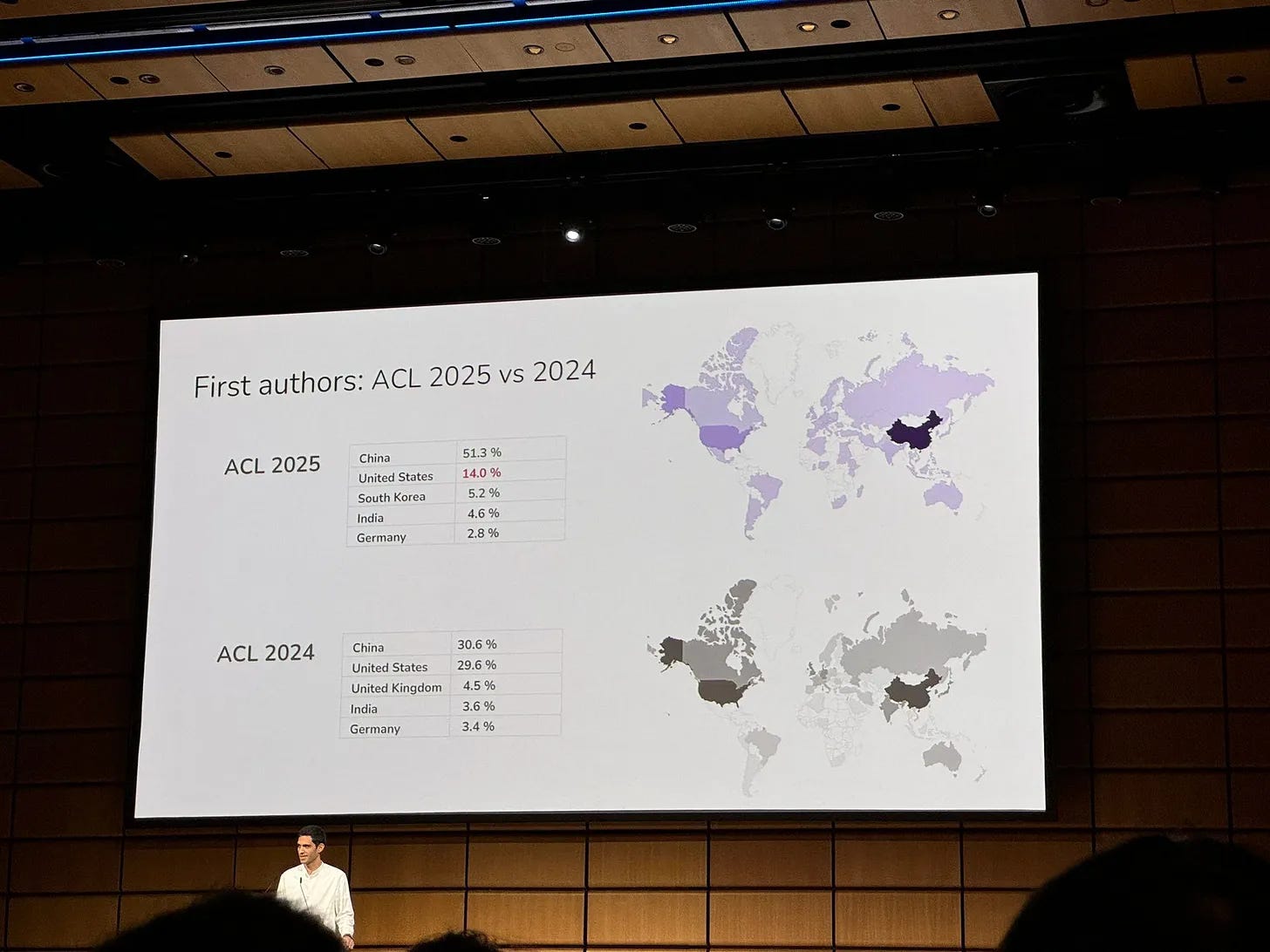
The US finds it increasingly harder to keep up with the pace and speed of innovation. At ICLR, one of AI's three most prestigious conferences, Chinese papers were outnumbered 5-to-1 by American papers in 2021 — by 2025 they are almost equally numerous. At NeurIPS 2025, China and the US were neck-and-neck in paper counts, at ACL-2025 Chinese papers significantly outnumbered the US papers -a dramatic reversal from just a year before.
It is time to swallow the arrogance and the superiority complex, turn our eyes towards the East and learn from what is happening there. They learned from us but the student outperformed the teacher and now it’s teacher’s time to become the student.
In this article I will talk about the recent advances of Chinese AI, how we can leverage it, how we can use it now and maybe even what it would take to make sure that the roaring dinosaur does not die out but evolves and comes back as a different species and dominates the earth again.
But let us be intellectually honest about where Europe actually stands before we talk about evolution. Mistral, Europe's flagship model, currently lags 6–12 months behind leading US and Chinese systems on standard benchmarks, while costing more per token. Europe is not competing for the frontier - not today, not tomorrow, not in the next few years. And pretending otherwise is exactly the kind of denial we just criticized. The dinosaur is not secretly winning. It is losing, and it knows it.
The dinosaur that survives is the one that stops roaring about past greatness and starts evolving, led by natural selection, picking up the dominant and winning features of the others and adjusting to the new environment. It cannot exist as a ghost of what it was but needs to continue as a new species, built for the new world.
Agentic Large Language Models
A few months ago I wrote that the release of Kimi-K2 was one of the most significant events in AI in 2025 along with the GPT-5 flop. Many have completely forgotten about that model but that model was not just another model - that was a model that opened up a new era: open-weight agentic models that are on par with commercial models. Kimi-K2 reached parity with American models, outperformed them in coding and agentic calls. When GPT-5 struggled with complex real-world coding tasks, Kimi-K2 was designing full websites. That is when it was clear what is happening next: Chinese models will be on par with US models and might even become the best agentic models.
Further in the article:
Which specific Chinese models can we use, and where, without compromising security
Which Chinese video, image, and text models are outperforming their Western counterparts
Which Chinese models are 20× cheaper than Claude Sonnet, deliver comparable performance, and fit on desktop GPUs
What is the reality of bias in Chinese models
What distillation “attacks” are
What we can learn from China